-
What are those little black flies in my potting soil?

Everyone knows the problem of having small flies at home. But did you know that there are many different flies and that they also do different things at home? Yes, they do things and sometimes little things that you don't like and your plants don't like either.
In this case we are talking about the fungus gnats. Sometimes it can be a real pest of little black flies! Where do these flies come from? And, most importantly, how do you get rid of these creatures?
how to eliminate fungus gnats?
These black or dark coloured fungus flies are not to be confused with a mosquito. They appear to be harmless, only live about two or three days and like to find a place to breed and die. But what these flies really love is the damp potting soil of your houseplants. So far there is not much of a problem. The bad thing is that your plants are in these pots and they are the victims. They lay larvae eggs in the substrate, up to 200 at a time. After a few days, the larvae hatch from these eggs and damage the plant. They usually eat the roots of your plants. This can cause permanent damage, especially when the plant is small. After three weeks of eating, the larvae pupate and turn into those annoying little flies.

Don't worry, the good news is that you can solve the problem of this real pest. Here are five effective solutions and what's more, without having to use insecticides!
let the soil dry
One of the first things you can do, if you see a few potting soil flies flying around, is to keep your potting soil drier. Then they can't find a good place to lay their eggs and it's all over. But some plants don't like it very much, especially if you have plants that like moist soil.
For many plants, such as calatheas, this is not a good solution. For many tropical plants a humid soil or substrate is very important to be able to grow without problems. For example: succulents, Alocasias, yuccas, cacti and some Philodendrons.
immersion watering
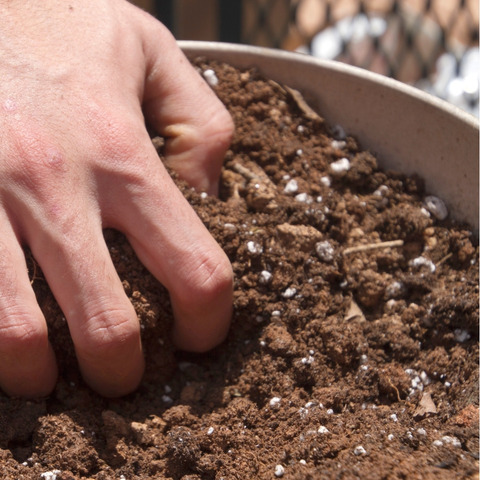
Another way to combat the substrate fly is dipping irrigation. This is a type of watering that is based on introducing the plant into a container or bucket with water until all the soil has become somewhat soaked or wet. Normally, the period of time needed for this is between 10 and 15 minutes. If the substrate is very dry and has become so compacted, it may be necessary to keep the plant in the container for a longer period of time.
The top layer will dry out and it is here that the March flies land to lay their eggs. Now the flies will have to find another place. Does it work? Well, it works pretty well, but it takes time. This method works well in combination with the following option.
fly traps
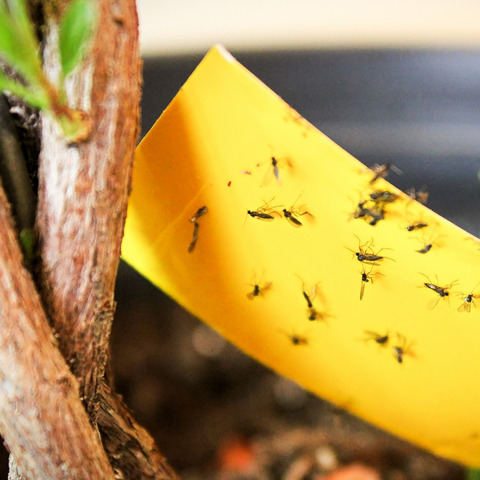
We really like this solution. They are small yellow plastic plates that look like traps. These fly traps have an adhesive on both sides and the bottom part is stuck into the substrate inside the pot. The yellow colour attracts the flies and when they touch these traps, they will stick to them. The yellow double-sided stickers are easy to use. They are made of non-toxic and environmentally friendly material. The only downside is that plants and pots don't look very pretty with so much yellow.
nematodes for larval control
A method that is also successful with many people is the use of nematodes. These are microscopic worms that come in a kind of powder form. You mix them with the water you give to your plants. The nematodes attack the larvae, which die quite quickly. It is important to keep the soil slightly moist so that the nematodes can move around well. If the soil is very dry before planting the nematodes, it is a good idea to moisten it first and only then pour the nematodes into it. If you pour the nematodes into dry soil, there is a good chance that some of the nematodes will escape from the pot. The nematodes reproduce as long as there are larvae and the soil is moist. As soon as the infestation is over, the nematodes also die.
With these nematodes you tackle the larvae in the soil, but of course you still have the flies in the air. You want to catch as many as you can, so that there are none left to form a new family. You can try to kill them all one at a time, but you can also try to eliminate them with the following method.
remove the potting soil
The last solution in this article is to replace all the soil or substrate in the pot if the pest is very persistent. It's a pretty drastic measure and will keep you entertained for a while. It is literally the root cause of the problem. It is something you will have to take very calmly and it is also stressful for your plant. Removing all the soil between the roots doesn't please the plants. Secondly, you still can't be sure that all larvae and eggs are gone when you remove the substrate. There will always be some flies flying around and they will simply lay new eggs in the new potting soil. So you will have to resort to other methods as well.
houseplants that need little water
Houseplants that need little water are easy to care for; the good thing is that you don't have to water them every 3, 5 or 7 days. Water these plants only when the soil has dried out over a long period of time. The good thing is that by keeping especially these plants in the house you avoid the risk (to a minimum) of having soil flies in the house.
Tengo un verdadero problema con las moscas. He cambiado la tierra, he tenido que tirar las plantas, también he dejado secar la tierra. No importa, siempre acabo teniendo moscas. He llegado hasta echar insecticida normal por encima. Vivo en una primera planta y debajo hay jardines. Cómo puedo eliminarlas? Por qué vuelven? La verdad es que me tienen muy preocupada y enfadada. Acabaré tirando todas las plantas. Tuve que deshacerme de un cactus de navidad que llevaba conmigo cinco o seis años. Todo empezó al cambiarme de domicilio. Gracias por su atención, pero ya no sé qué más hacer.
@MARTA LÓPEZ: Aquí te dejo unos trucos fáciles para deshacerte de ellos. Primero, intenta dejar que la parte de arriba de la tierra se seque un par de centímetros entre riegos; a estos bichos les encanta la tierra húmeda, si no puedes dejar secarlo tan fácil, repetimos: riego por inmerso. Además de esto puedes usar trampas adhesivas amarillas para atrapar a los mosquitos que vuelan, se pueden comprar en centros de jardinería y en tiendas especializadas. Luego hay que espolvorear canela y café en la tierra (sustrato); la canela es un antifúngico natural que puede ayudar a mantener a raya a esos mosquitos. Si te animas un poco más, puedes mezclar un poco de agua oxigenada (diluida) en la tierra; matará a las larvas sin dañar a tus plantas. Siempre hay que actuar meticulosamente y si haces una sola cosa podrá ser insuficiente para terminar con la plaga. ¡Suerte, y dile adiós a esos mosquitos!