-
This is how you care for a terrarium with plants!

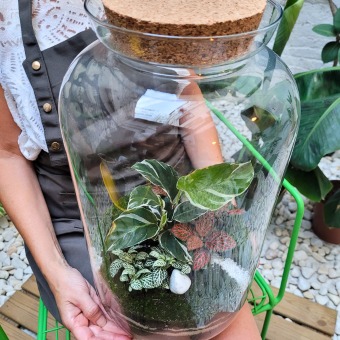
Closed terrariums with tropical and subtropical plants are a fantastic option for those who want to enjoy a small ecosystem in their home and a beautiful decorative piece at the same time.
These mini glass eternal gardens require simple care, provided that some key recommendations are followed to maintain their balance and beauty.
Here are some essential tips to care for your closed terrarium and ensure that the plants thrive in their ecosystem.
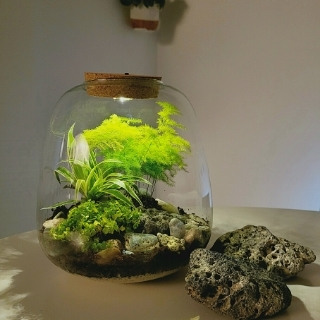
how does a terrarium work?
If you already have or have been given a terrarium, the humidity and temperature tend to stay quite stable due to it being sealed/covered, thus protecting the plants from potential contamination. In this way, the bottled garden creates its own mini-closed ecosystem, providing a perfect climate for plant growth.
The eternal garden truly develops its own ecosystem. When you assemble the glass garden, the soil remains moist, and the plants absorb water. Through their leaves, the plants release water, causing the glass of the terrarium to fog up. This creates a closed space with constant humidity. Additionally, water droplets that drip from the glass onto the substrate keep the humidity levels up, eliminating the need for manual watering.
However, some moisture can escape through the seal, so it is important to monitor that the interior remains humid. Does the soil look dry? Spray a little water with a plant mister or add a small drip of water onto the substrate or gravel.
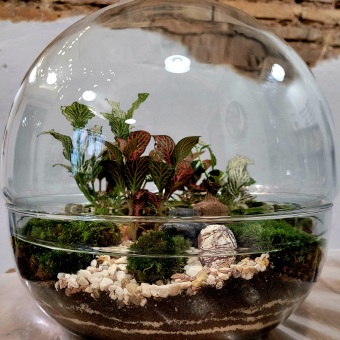
what type of light does a closed terrarium need?
Tropical plants in a closed terrarium require bright indirect light to grow healthy and strong. It’s important to avoid direct sunlight, as it can cause the inside of the glass to heat up too much, damaging the plants or causing excessive condensation.
- Place your terrarium in a spot with diffused natural light, preferably near an east or west-facing window where it will receive indirect light for several hours a day.
how often should I water a closed terrarium?
Watering a closed terrarium should be very moderate. Due to the humidity generated by the ecosystem itself, the plants usually need very little additional water. A good indicator is the glass: if it fogs up, the humidity is sufficient. If in doubt, check the substrate or moss by touching it; if it feels dry, lightly spray the plants and moss with water using a mister, a few times a week. Avoid overwatering, as excess water can cause mould or rot.
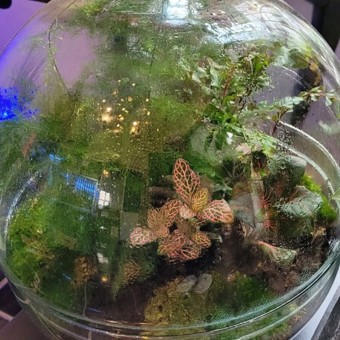
how to maintain the proper humidity in a closed terrarium?
Humidity is vital for (sub)tropical plants, and in an eternal closed garden, it is maintained naturally through condensation on the glass walls. To prevent excess moisture, open the lid for a few minutes each week to ventilate and prevent mould. If you notice a lot of condensation forming or the plants look too moist, open the lid more often or remove some water from the bottom.
what is the ideal temperature for a terrarium?
- The ideal temperature ranges between 20 and 25°C, but plants can tolerate up to 30°C for a few weeks.
- Ensure the temperature does not drop below 15°C in winter.
Place your terrarium in a spot away from cold drafts or excessive heat, such as near radiators or cold windows. Most tropical plants prefer a stable environment, so avoid moving it frequently or placing it in areas with sudden temperature changes.
additional care needed for a closed terrarium
Besides controlling light, humidity, and temperature, it’s important to regularly check the plants for pests or signs of disease. Remove dead or damaged leaves to prevent infections and keep the mini-ecosystem looking neat. You can also add small amounts of diluted liquid fertiliser once a month, using very little to avoid disrupting the humidity balance.
fertilising plants
Terrarium plants have little need for fertiliser. Overfeeding leads to excessive growth, making the plants too large for the terrarium.
- Growing season: Fertilise only during the growing season, generally from spring to early autumn (March to October).
- Diluted fertiliser: Use a balanced liquid fertiliser, diluted to a quarter (1/4) of the recommended concentration.
- Frequency: Fertilise sparingly, for example, twice a year.
- New terrariums: Wait at least a year after setting it up before adding fertiliser, as the fresh soil still contains enough nutrients.
activated charcoal
Activated charcoal is an essential ingredient in terrariums, helping to keep the water and environment free of odours and contaminants. It prevents the proliferation of bacteria and fungi, thus protecting the roots and plants. It also helps filter impurities from the water and maintain a healthier, more balanced environment in your mini-ecosystem;
- Add activated charcoal to the surface of the soil after 2 years.
create a balanced and healthy terrarium
Let's conclude with these final tips.
- We Remember not to overload the interior with too many plants; a balanced design promotes healthy growth.
- Constantly monitor condensation, humidity, and temperature
- Adjusting the location if necessary.
- Clean glass with slightly humid kitchen paper and never use detergents
With these simple care tips, your glass mini-ecosystem will be a vibrant and beautiful corner for a long time. And if you want you can always follow a cool and interesting workshop in the shop in Valencia!
terrarium shop florespaña
Calle Romeu de Corbera 1046006 VALENCIA
No comments found.