-
A complete cuide to caring for Yucca Elephantipes

Would you like to learn how to care for a plant that brings an exotic and sophisticated touch to your home? The Elephant Foot Yucca (Yuca Pie de Elefante) is a perfect choice for those seeking a hardy, low-maintenance plant with an impressive appearance. Its imposing stature and long, lance-shaped leaves make it an excellent option for decorating any space, both indoors and outdoors. Additionally, this species is very easy to care for, provided you follow some basic guidelines regarding light, watering, and soil.
In this article, we explain everything you need to know to keep your Elephant Foot Yucca healthy and beautiful, from its main characteristics to the specific care it requires at each stage of its growth. We also offer useful tips on how to repot, prune, and which varieties are most recommended for decorating your home. If you want your plant to grow strong and full of life, don’t miss our recommendations.
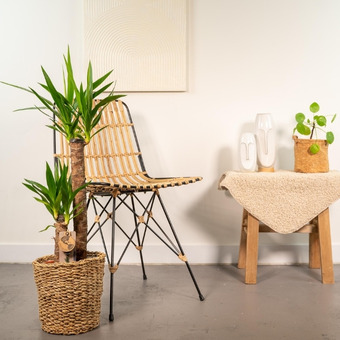
particularities of the Yucca Elephantipes
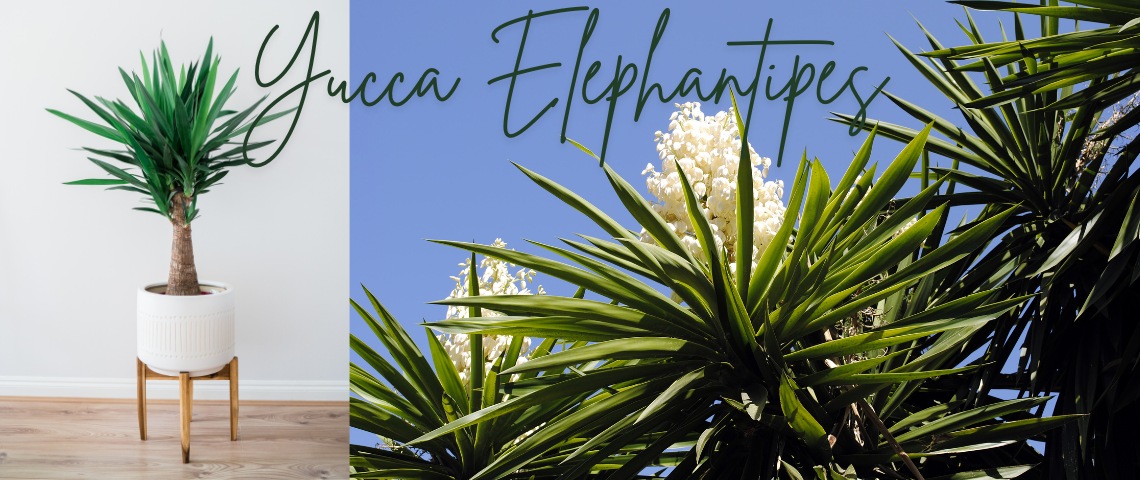
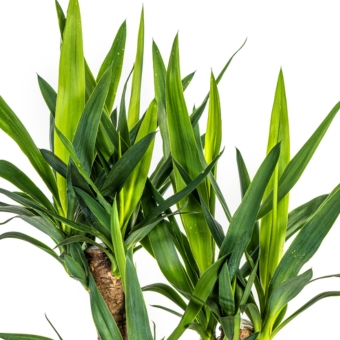
The Elephant Foot Yucca (Yucca Elephantipes, Spineless Yucca or Yucca Elegans) belongs to the shrub category and is distinguished by its tall trunk and few branches. Its leaves are long, lance-shaped, and a vibrant green colour. It is also suitable for indoor cultivation.
This species is part of the group of indoor plants and is highly valued for decorating homes. It stands out for its long, pointed leaves, similar to those of a palm.
Its hanging flower clusters, in cream, white, or with pinkish hues at the top, are very striking. It is a highly recommended plant if you like exotic species for decorating your home. It can reach heights of 2 to 4 metres indoors, and up to 8 metres outdoors.
The Elephant Foot Yucca produces a black berry, which, although many species are edible, is not usually consumed in this case. It is resistant to drought, as its leaves close their stomata to conserve water, and its roots can penetrate up to two metres in search of water, making it an excellent option for outdoor spaces as well.
varieties of yucca
There are around 50 different varieties of Yucca. The most suitable for indoor cultivation is the Yucca Elephantipes, also known as Elephant Foot Yucca. Another decorative variety, though less recommended for indoors, is Yucca Aloifolia, which has tougher leaves. This species is native to tropical areas of America but adapts well to Mediterranean climates. Other varieties that can decorate your home include Yucca Filamentosa, Yucca Gloriosa, and Yucca Rostrata.
tips for caring for your Elephant Foot Yucca
The Elephant Foot Yucca is known for being an easy-to-care-for species and is considered an excellent choice for decorating various corners of your home. Additionally, it is very attractive due to its leaves and flowers, which last for long periods and emit a pleasant aroma.
light
This species needs plenty of natural light to grow healthily and strongly. It prefers sunny, warm environments as it develops. However, it struggles to grow and flower in low-light conditions. It’s important not to expose it to direct, intense sunlight, as this can burn its leaves. The ideal is to place it in a spot with gentle, filtered light.
temperature and humidity
It prefers warm temperatures, between 16 °C and 38 °C. Below 16 °C, its growth stops. It’s recommended to take it outside in summer and keep it in a cool place during winter, away from heat sources and cold drafts, but without letting the temperature drop too low.
watering
Water every 15 to 20 days in winter and approximately once a week in spring and summer. It’s very common for it to die from overwatering, so it’s essential that the substrate is completely dry between waterings.
soil
It isn’t demanding regarding the type of soil, but the most recommended is well-draining, sandy soil. It can adapt to arid, rocky soils with a lot of gravel. It’s important to avoid waterlogging, especially in pots.
For potted plants, it’s advisable to use a garden fertiliser, permeable, and with good drainage, mixed with coarse sand and perlite. Loosen the soil every three or four months to maintain permeability and prevent compaction.
repotting
It’s important to repot the plant when it reaches adulthood, usually at 3 or 4 years old, into a deeper pot. After that time, only the topsoil needs to be replaced with fresh, nutritious soil.
pruning
Pruning your Yucca is straightforward. Remove dead or damaged leaves and branches during growth. It’s also recommended to cut back small branches after flowering to focus nutrients on the plant. Side branches should be pruned to maintain balanced growth.
fertilising
To promote healthy growth, fertilise your Yucca Elephantipes every 4-6 weeks during spring and summer with a balanced liquid fertiliser. Don’t overfeed your plant; use the recommended dose to avoid salt buildup that could damage roots. In autumn and winter, you can reduce or stop fertilising altogether, as the plant enters a rest period and needs fewer nutrients.
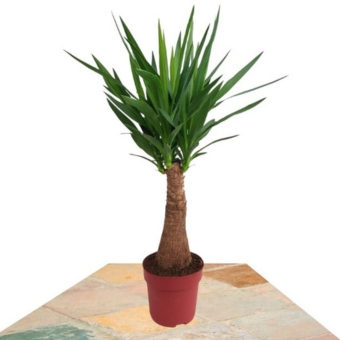
10 tips for your Yucca Elephantipes
- Place your Yucca in a spot with direct or semi-direct sunlight for optimal growth.
- Water only when the soil is completely dry to prevent overwatering and root rot.
- Avoid sudden changes in temperature and drafts that could stress the plant.
- Fertilise in spring and summer every 2 months with a balanced fertiliser for indoor plants.
- Clean the leaves with a damp cloth to remove dust and keep it looking healthy.
- Remove yellow or damaged leaves to promote clean, healthy growth.
- Use well-drained soil, preferably with sand or gravel to prevent water accumulation.
- Avoid moving it frequently to reduce stress, as it is a hardy but sensitive plant to sudden changes.
- Repot every 2-3 years into a larger container to facilitate growth.
- Regularly check for pests such as scale insects or spider mites and treat promptly if detected.
¡Find your Yucca on our website!
Now that you have all the necessary information to care for your Elephant Foot Yucca, don’t hesitate to place your order on our website florespaña.es, a nursery that guarantees the quality of all its species.
In addition to the Elephant Foot Yucca, on our website you can discover other species you might not know but would love. Explore our catalogue and check the descriptions of each plant to learn about their specific care requirements and ensure they grow healthy and strong.
No comments found.