-
How to Plant Bulbs in Autumn for a Flower-Filled outdoor space during spring

Imagine stepping out onto your balcony or terrace in spring to find colourful tulips, sunny yellow daffodils and little crocuses bursting into flower. Even if your garden looks a little bare right now, autumn is the perfect time to start preparing for a colourful spring. All you need is a few favourite flower bulbs, some pots or a spot in the garden, and a little time to get planting.
Spring-flowering bulbs are planted in autumn so they can develop their roots during the cooler months and bloom after winter. And the best part? You don’t need a large garden to enjoy them. You can grow beautiful spring flowers in pots, planters and even on a small balcony.
In this guide, we’ll show you when to plant spring bulbs, which varieties to choose and how to plant them step by step. You’ll also discover how to combine different bulbs in the same pot for a succession of blooms on your balcony, terrace or in your garden.
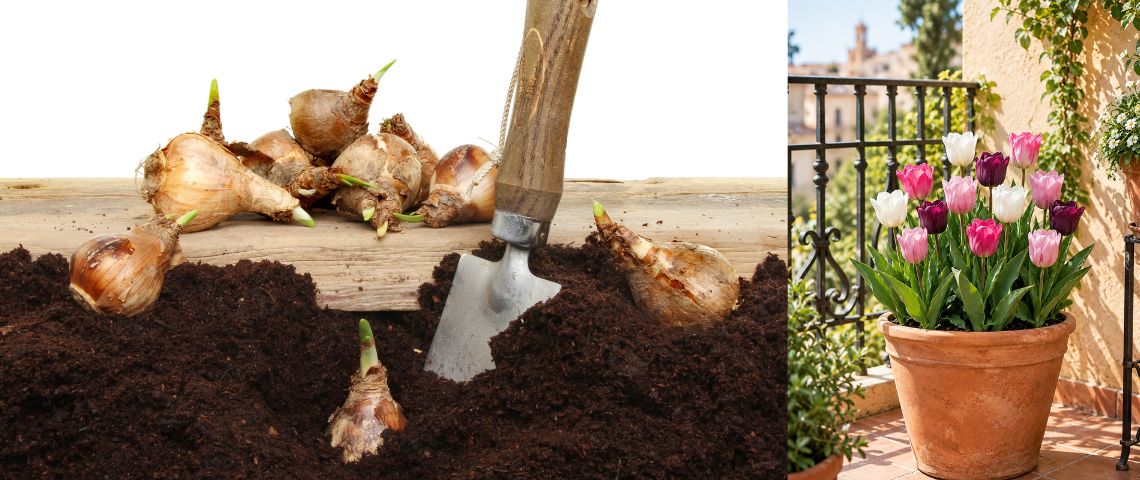
1. when to plant spring bulbs
The best time to plant spring-flowering bulbs is generally autumn, usually between September and December, as long as the ground isn’t frozen. October and November are particularly good months for many varieties, although the ideal planting time depends on the type of bulb and your local climate.
If you want to fill your balcony with tulips, brighten up your terrace with daffodils or create a colourful corner in your garden, it’s best to plan ahead. This gives your bulbs several months to develop their roots before spring arrives.
2. why plant bulbs in autumn?
Although plants begin preparing for winter in autumn, this is precisely the right time to plant many spring-flowering bulbs. The soil often retains some warmth from summer, helping the bulbs establish their roots before the colder weather sets in.
- They develop roots before spring: bulbs have time to settle into the soil or compost in the months leading up to flowering.
- They need a period of cold: many varieties, including tulips, need a period of cold weather to complete their development properly.
- They prepare your garden for spring: when the weather warms up, the bulbs begin to shoot and bring colour to pots, planters and flower beds.
So, if you’re dreaming of a spring full of flowers, autumn is the perfect time to get started.
3. which bulbs flower in spring?
There are plenty of spring-flowering bulbs to plant in autumn. Combining different varieties allows you to create colourful displays in the garden, as well as in pots and planters.
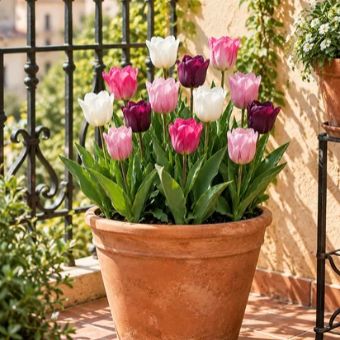
Tulips: the stars of spring
Tulips are perfect for adding colour and elegance to balconies, terraces and gardens. They come in a wonderful range of shades, from white and soft pastels to yellow, red, pink and purple. Depending on the variety, they usually flower in spring, particularly in April and May.
Daffodils: a little sunshine and joy
Daffodils are known for their cheerful yellow or white flowers, which brighten up any outdoor space. They look especially lovely planted in groups, whether in the garden or in larger planters. Many varieties can flower year after year when given the right care.
Crocuses and snowdrops: the first signs of spring
If you love seeing the first signs of spring, crocuses and snowdrops are wonderful choices. Some varieties flower towards the end of winter, when the days can still be chilly. Their delicate blooms bring a welcome splash of colour to quieter corners of the garden.
Hyacinths and grape hyacinths: colour and charm in pots
Hyacinths are loved for their clusters of flowers and lovely fragrance. Grape hyacinths, also known as Muscari, produce small clusters of flowers, usually in shades of blue, although white and other colours are available too. Both are ideal for combining with other bulbs in pots and planters.
4. how to plant bulbs step by step
Planting bulbs is easy and incredibly rewarding. Follow these five steps to give them the best possible start, whether you’re planting them in pots or directly in the garden.
1. choose the right spot
Most spring-flowering bulbs grow well in sunny or partially shaded spots, depending on the variety. The most important thing is to choose soil or compost that drains well. Bulbs don’t like sitting in water, as excess moisture can cause them to rot.
2. prepare the soil or compost
In the garden, loosen the soil to make it easier for the roots to grow. If you’re planting in a pot or planter, use good-quality compost and make sure the container has drainage holes in the base.
3. plant the bulbs at the right depth
As a general rule, bulbs should be planted at a depth of around two to three times their own height. However, the exact depth can vary from one species to another, so it’s always worth checking the instructions on the packaging.
4. position the bulbs correctly
If the bulb has a clearly pointed tip, place it facing upwards. The base, where the roots develop, should face downwards. Leave enough space between bulbs so they have room to grow without becoming too crowded.
5. water after planting
After planting, water lightly to help the compost settle around the bulbs. Avoid waterlogging and make sure excess water can drain freely through the holes in the base. If the soil is already moist from rainfall, you may not need to water at all.
5. how to plant bulbs in pots, on balconies and terraces
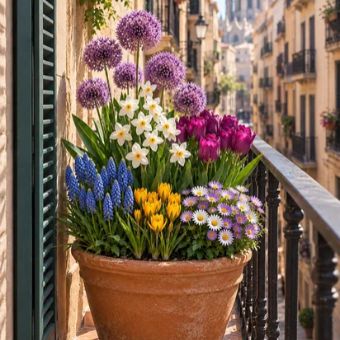
You don’t need a garden to enjoy a spring full of flowers. With a few pots or planters, you can transform even a small balcony or terrace into a colourful little oasis. The secret is choosing the right containers and making sure the bulbs have good drainage.
choose pots with drainage holes
Your containers should have holes in the base so that excess water can escape. This is especially important during rainy months, when compost can stay wet for several days.
use free-draining compost
Fill your pots with suitable, good-quality compost and make sure it doesn’t become too compacted. Good drainage helps keep bulbs healthy throughout winter and reduces the risk of rot.
combine colours and heights
For a beautiful display, combine bulbs in different colours, sizes and flowering periods. You could create a planter filled with pastel tulips, mix yellow daffodils with blue grape hyacinths, or bring several colours of hyacinths together in one pot.
find the right position
Place your pots where the chosen bulbs will receive the light they need. Many spring bulbs prefer a sunny or partially sunny position. If your balcony doesn’t get much sunlight, check the growing requirements of each variety before choosing which ones to plant.
keep an eye on watering during winter
Rainfall may provide enough water throughout autumn and winter. Check the compost before watering, and don’t leave pots standing in saucers full of water. Compost in smaller containers can dry out more quickly than in larger planters, so it’s worth checking the moisture level from time to time.
With these simple tips, you can enjoy tulips, daffodils and other spring flowers even if all you have is a small urban balcony.
6. bulb lasagne planting: one pot, flowers for longer
Want to make the most of your pots and enjoy different flowers throughout spring? Try a technique called bulb lasagne planting. It involves planting different varieties in layers, while respecting the recommended planting depth for each type.
The idea is to combine bulbs with different flowering times so that new blooms appear in succession. This means one pot can surprise you with fresh flowers as the season progresses.
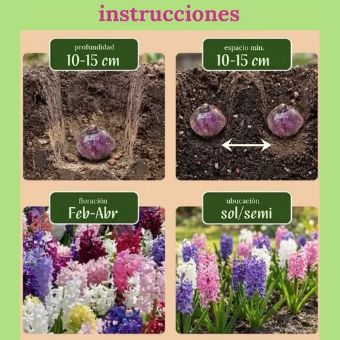
how to create a bulb lasagne
- Bottom layer: place bulbs that need to be planted deeper at the bottom, such as many varieties of later-flowering tulips.
- Middle layer: add a layer of compost and plant other bulbs, such as daffodils, at their recommended depth.
- Top layer: finish with smaller bulbs that need to be planted less deeply, such as some crocuses.
Leave enough compost between the layers and avoid letting the bulbs touch one another. Your pot also needs to be deep enough to give each variety room to develop its roots.
This technique is ideal for terraces and balconies because it makes the most of limited space and creates a display with different heights, colours and flower shapes.
7. how to plant bulbs directly in the garden
If you have a garden, you can plant bulbs in flower beds, borders, beneath deciduous trees or in small groups among other plants. For a more natural look, avoid planting them in perfectly straight rows. Arranging bulbs in informal groups usually creates a more relaxed and attractive display.
- Choose a well-drained spot: avoid areas where water collects after rainfall.
- Plant in groups: several bulbs of the same variety planted together usually create a stronger visual impact than individual bulbs scattered around.
- Combine flowering times: mix early- and later-flowering varieties to keep your garden looking interesting for longer.
- Leave enough space: follow the recommended spacing for each variety so the bulbs have room to grow.
You can also plant bulbs among perennial plants or shrubs, provided they receive enough light during their growing season and the soil drains well.
8. what to do with bulbs after flowering
When the flowers fade, don’t rush to cut off all the leaves. Even without flowers, green foliage is still important because it allows the bulb to store energy for the next growing cycle.
Remove faded flowers if you wish, but leave the foliage in place until it turns yellow and dies back naturally. During this period, continue watering when needed without allowing the compost to become waterlogged. Some varieties may flower again in future seasons, although how often and how well they return depends on the species and growing conditions.
9. get your balcony, terrace or garden ready for spring with FlorEspaña
Spring begins long before the first flowers appear. Planting bulbs in autumn is a simple way to bring your outdoor spaces to life and enjoy a burst of colour after winter.
Whether you want to brighten up a small balcony with pots, fill your terrace with colourful planters or create a garden full of tulips and daffodils, there’s a combination to suit your space.
Discover spring-flowering bulbs at FlorEspaña, choose your favourite varieties and start getting your green space ready for the next season. Plant now and look forward to a spring full of flowers!
No comments found.