-
How can perlite benefit the quality of soil and growth of your plants?

Do you want to make plant care easier and improve their growth? Perlite, also known as expanded perlite, is a natural material that has become an essential ally for gardeners and horticulturists. This volcanic mineral, treated through a heating process, expands into small, lightweight, porous particles that help improve substrate structure. It is an eco-friendly, durable, and versatile option, perfect for both potted plants and hydroponic crops.
In this article, you will discover what exactly perlite is, how it is obtained, and its main benefits and applications in caring for your plants. If you want to learn how to make the most of its properties and optimize your garden's growth, keep reading!
¿what is perlite?
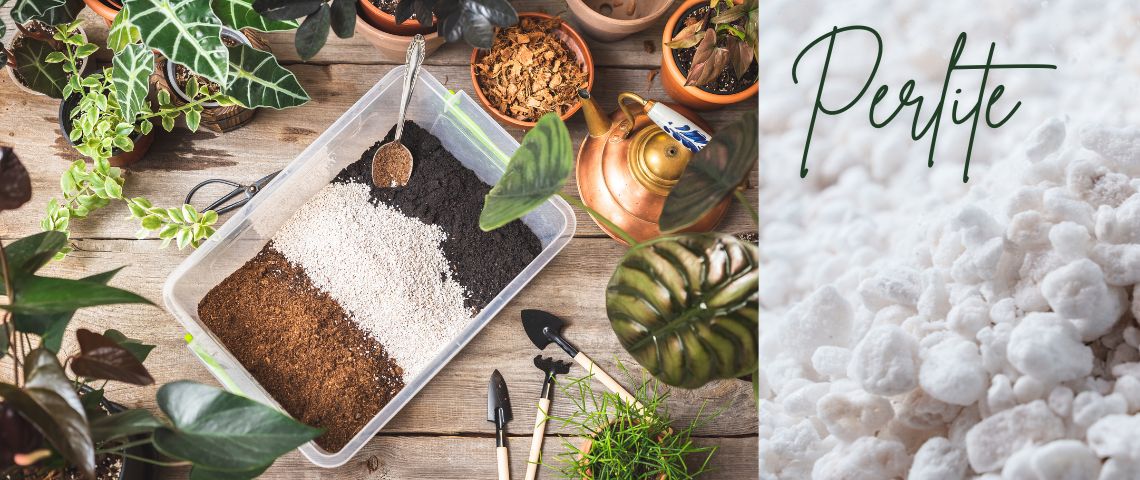
Perlite, also known as expanded perlite, (also volcanic popcorn, pomice or volcanic glass) is a natural volcanic mineral that undergoes a heating process at extreme temperatures (around 900 to 1100 °C). During this process, the mineral expands into small, lightweight, porous particles that are white or grayish. Due to its structure, perlite has a high capacity to retain air and water, making it ideal for improving substrate quality in various types of cultivation. It is an inert, inorganic, and highly resistant material that does not decompose or degrade over time.
¿how is perlite obtained?
The raw material, volcanic perlite, is extracted from natural deposits where it is found in its original state. It is then subjected to a high-temperature process in rotary kilns that causes it to expand. Exposure to heat makes the mineral swell, creating air bubbles inside, resulting in lightweight, porous particles. This process yields a durable, reusable material that is easy to incorporate into different gardening and horticultural mixes.
¿what are the benefits of perlite?
Perlite offers several advantages for plant care:
- Enhances drainage capacity, preventing waterlogging and root rot.
- Increases soil aeration, promoting healthy root development.
- It is an inert material that does not alter the pH of the substrate, maintaining stable conditions for plants.
- Reduces soil compaction, facilitating nutrient absorption.
- Provides a light, loose texture, ideal for container cultivation and hydroponic systems.
- It is an ecological, durable, and reusable material that contributes to more sustainable cultivation.
¿What is perlite used for?
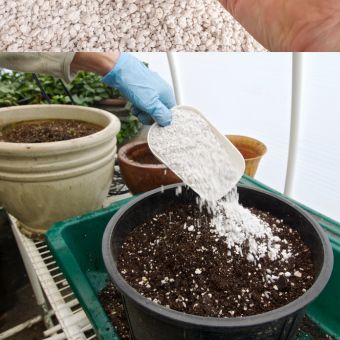
Perlite has multiple applications in gardening and cultivation:
- Mixed with soil or substrate to improve structure and facilitate drainage.
- As a component in hydroponic systems to keep roots oxygenated.
- On the surface of pots, to retain moisture and prevent substrate compaction.
- To improve drainage capacity in pots without drainage holes or during transplanting.
- In creating specific mixes for plants that require good drainage, such as cacti and succulents.
- To prepare lightweight, airy substrates for indoor and outdoor crops.
¿how to use perlite in your pots and plants?
To take advantage of its benefits, mix perlite with soil, universal substrate, or another specific substrate at an approximate ratio of 20-30%. You can add it in layers on top of the substrate to improve aeration, especially in pots with poor drainage. In hydroponic systems, place the perlite at the bottom of the container and put the plants on top, ensuring the roots have access to oxygen. Additionally, perlite is reusable; just clean it, and you can use it in different projects without issues.
No comments found.