-
Arlita: what is it and what is it used for?

Do you want to improve the health and appearance of your plants? Clay pebbles, also known as expanded clay, are a natural component that can make a difference in your gardening projects. This baked and porous material is used as a substrate, decorative element or mulch, offering excellent drainage and aeration properties. Additionally, it is an eco-friendly and long-lasting option, ideal for both potted plants and hydroponic systems.
In this article, you will discover what exactly clay pebbles are, how they are obtained, and what their main benefits and uses are in caring for your plants. If you want to learn how to make the most of this versatile material and better care for your garden, we invite you to keep reading!
¿what are clay pebbles?
Clay pebbles, also known as expanded clay, are a baked and porous material obtained from natural clay. It is produced through a high-temperature firing process (around 1000°C), which causes the clay to expand, reducing its density and making it lightweight and spongy. The clay pebbles typically measure between 2 and 10 mm, and their colour ranges from shades of brown to crimson. It is an inert, inorganic material that is very durable and does not decompose over time.
¿how are clay pebbles obtained?
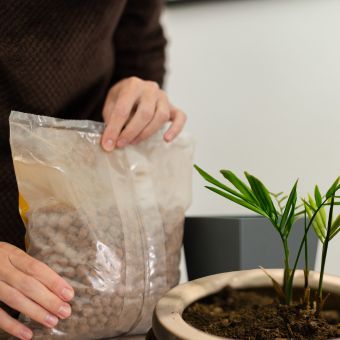
The raw material, clay, is extracted from the ground and taken to a rotary kiln where it is subjected to high temperatures. The exposure to these heat levels causes the clay to expand in size, creating small hollow balls that reduce weight and increase porosity. This process makes clay pebbles a lightweight, durable, and reusable material for various gardening projects.
¿what are the benefits of clay pebbles?
Clay pebbles offer several advantages for plant care:
- Improves drainage, preventing waterlogging and root rot.
- Allows excellent substrate aeration, facilitating root development.
- Is an inert material that does not alter soil pH, maintaining stable conditions for plants.
- Helps reduce soil compaction and retains moisture at appropriate levels.
- Is decorative and can be used on the surface of pots for aesthetic appeal.
- As it is long-lasting and reusable, it is an eco-friendly and cost-effective option in the long run.
¿what are clay pebbles used for?
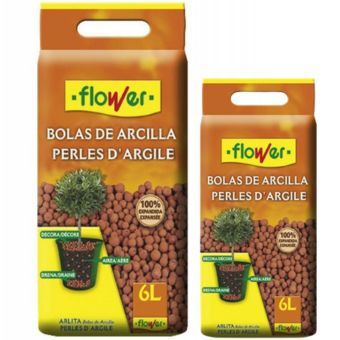
Clay pebbles have multiple applications in gardening and landscaping:
- As a component in soil mixes for pots and general gardening.
- In hydroponic systems, where they help maintain oxygen around the roots.
- Decorative surface layer in pots and floral arrangements.
- To improve drainage in pots without drainage holes and in transplanting.
- In creating substrate cultivation systems, especially for plants that require good drainage.
- For preparing specific substrates for cacti, succulents, and plants that need less water retention.
¿how to use clay pebbles in your pots and plants?
Our advise to make the most of its benefits, you can mix arlita with other substrates in appropriate proportions, such as 30% arlita and 70% soil or universal substrate. You can also place a layer of arlita at the bottom of pots without drainage holes to facilitate water runoff. In hydroponic systems, simply place arlita in the container and position the plants on top, ensuring the roots have access to oxygen. Furthermore, arlita is reusable, so you can clean it and use it across different plants without any problem.
No comments found.